Clean energy transition is facing geopolitical uncertainties, supply chain bottlenecks and high inflation. There is also an increasing local backlash against transmission infrastructure and/or renewable energy projects.
The so-called Not in My Backyard (NIMBY) movement has been building momentum, and at least 228 green projects in 35 US states have been facing restrictions. It becomes critical to distribution companies to structure rates that proactively shape load, and directly match the future power supply mix and and to strategically deploy energy storage.
Mission
Empower distribution companies to better understand their customer usage and patterns, determine cost exposure, review and improve customer rate alignments, and identify potential overall cost reduction opportunities. Know your customer! Enable developers to determine feasibility of new projects.
Vision
To shape future load and supply of power through continuous data diagnostic, simulation, and implementation.
Energy providers must know their customers! It starts with understanding the peak hours contribution from each customer class. Further, each customer class is analyzed through their largest consumers and their contribution to the costs. The tool visualizes load profiles that clearly identify whether customer classes have correlation with system load profile.
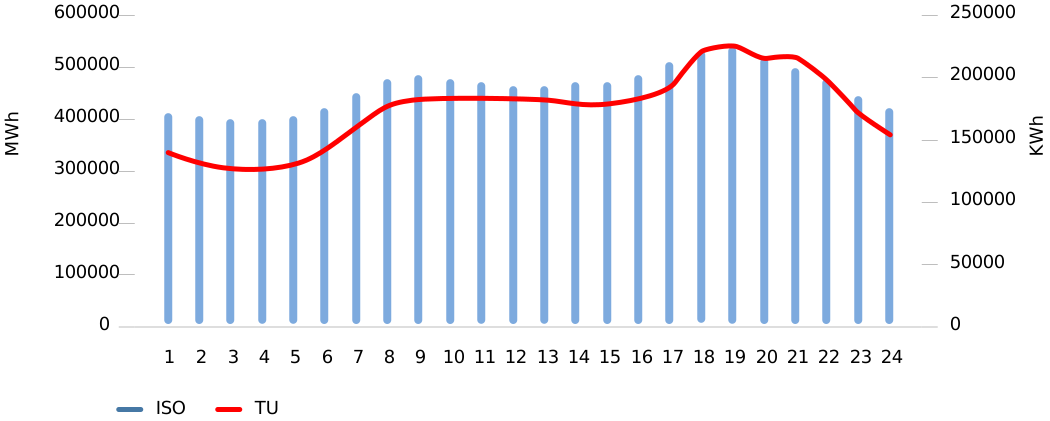
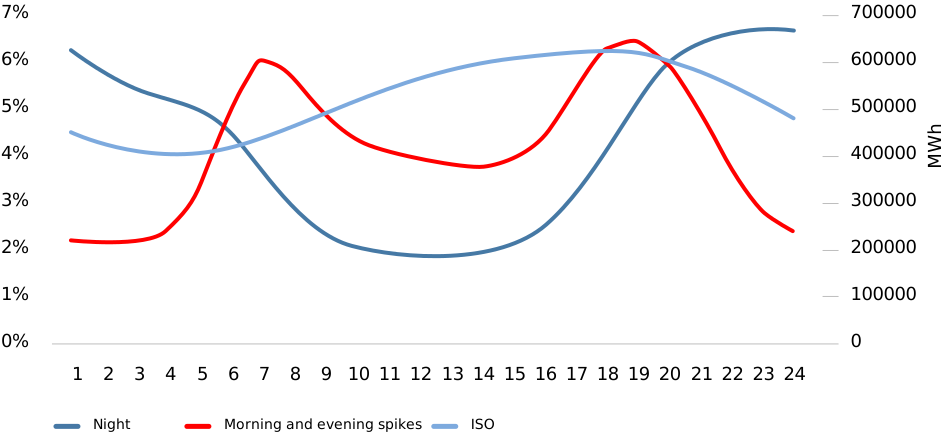
ISO vs TU Rate Class: January ‘24
Time of use (residential) rate largely followed ISO load in January 2024
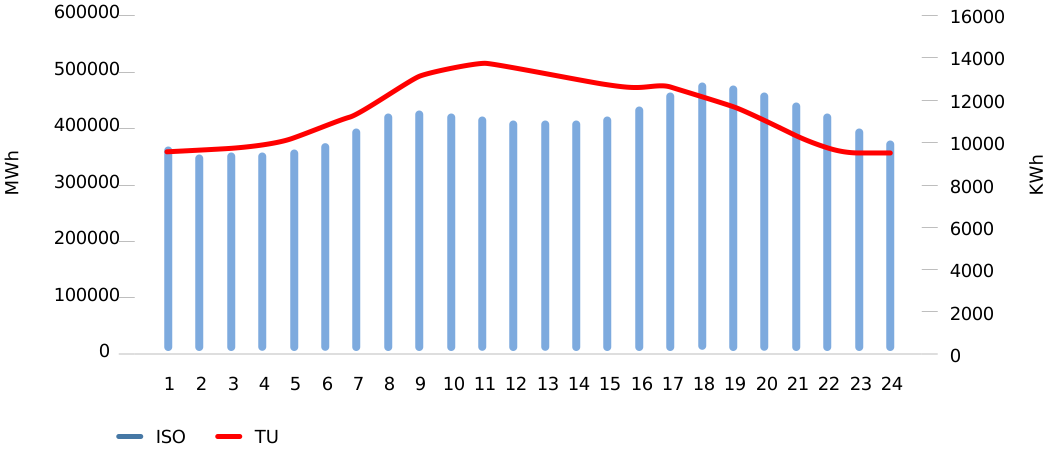
ISO vs C1 Rate Class: January ‘24
Earlier rate on average peaked early than ISO in January 2024
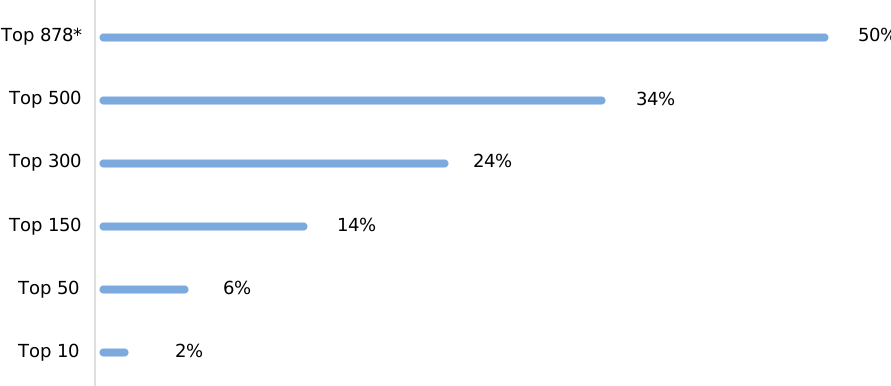
TU Rate Class Peak Hour Contribution
Top 300 Time of use (residential) meters represent 24% of the rate class total load during the ISO peak hour of January 2024.
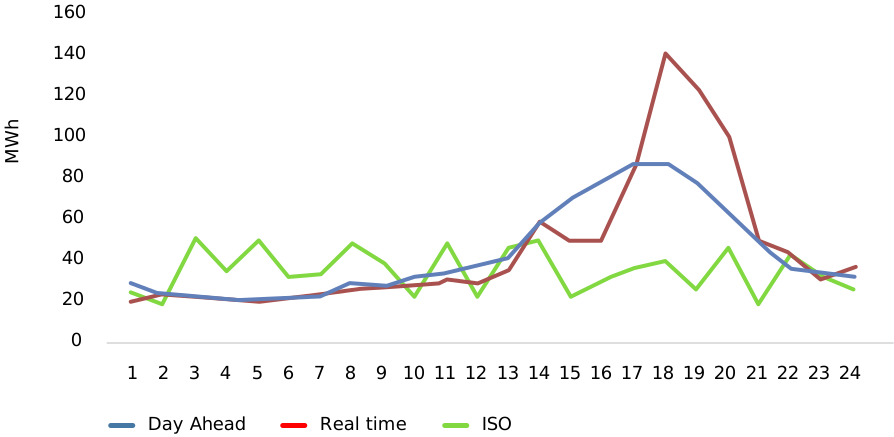
27th July ’20 Energy: DA vs RT vs PPA/Forward
Distribution companies can compare hourly, daily, monthly PPA/forward against day ahead and real time ISO pricing.
02
Simulation
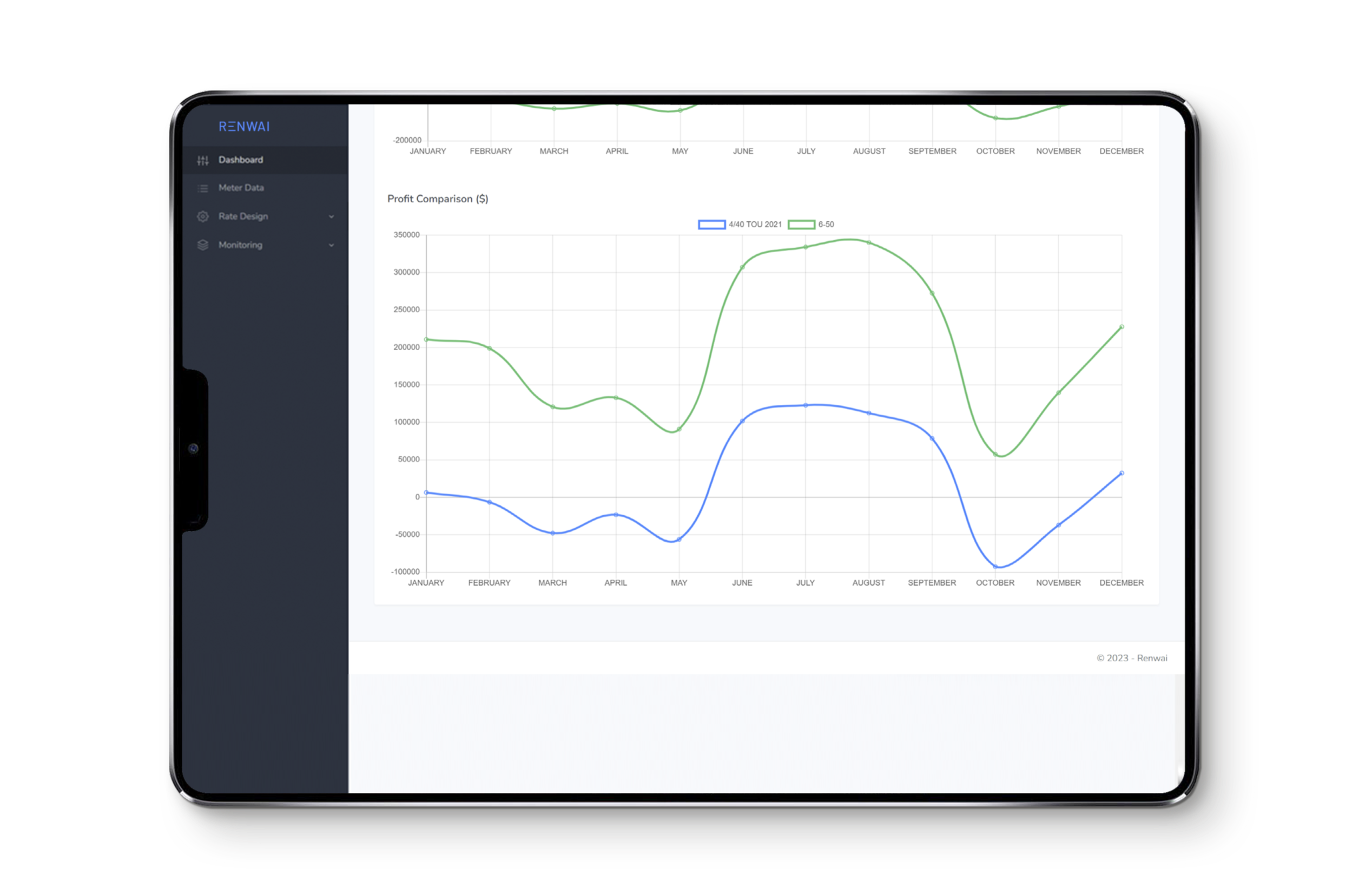
Energy providers understand which incremental strategy change will have the largest impact on demand reduction. It starts at simulating default or new rate design based on historical energy consumption data. Additionally, energy providers can simulate load reduction via cloud-based power portfolio management and/or new behind the meter power supply such as solar or storage technology.
Data science clustering of town level load profiles within each customer class for targeted messaging on rate and/or demand response programs.
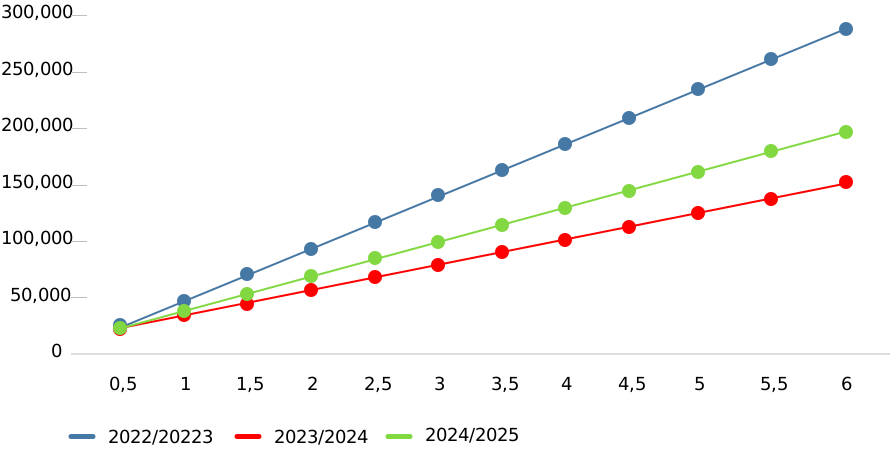
Savings ($) per Incremental 0.5 MW Capacity
Distribution companies can simulate battery storage capacity against capacity and transmission costs within different rate structures
03
Implementation
Energy providers can launch agile pilots to understand the impact on revenues, costs and customers bills of default or new rate designs. Additionally, energy providers can optimize PPAs/Forwards and/or energy storage procurement to better align load to default or new rates. The diagnostics and simulation data is continuously trained to predict load and costs to achieve the conclusive implementation decisions.